
THE NATIONAL FLAG – THE SOUL AND PRIDE OF THE NATION
“In the process of building a new statehood, the national flag serves as a visible sign of the nation’s sovereignty, a source of citizens’ pride, and an essential factor uniting the people for the defense of the independence and freedom of the Motherland, inspiring every member of society to selfless work for the sake of a stable future.”
Emomali Rahmon
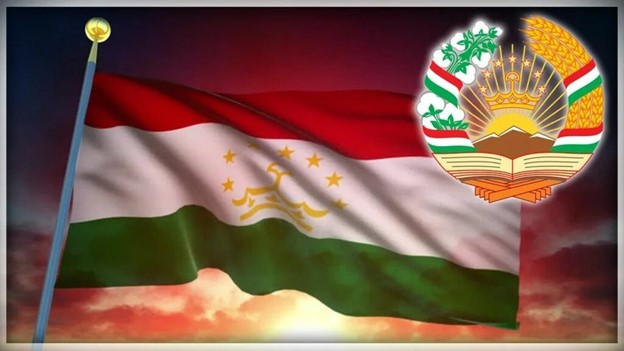
The national flag of the Republic of Tajikistan symbolizes the glorious past and bright future of the country, embodying its independence, honor, and unity. As a sign of respect for this state symbol, by the Decree of the President of the Republic of Tajikistan, Emomali Rahmon, November 24 was established as the Day of the National Flag, celebrated annually since 2009. The modern flag of independent Tajikistan was adopted at the 16th session of the supreme council on November 24, 1992. a closed competition was held for several months, with more than 200 designs submitted. The winning design was created by the artist Zukhur Khabibulloev, together with designer Anatoly Zanevsky and art historians Irina Ignatushina and Larisa Dodkhudoeva. Their version of the flag best reflected the history of the Tajik people and their national traditions.
The history of the Tajik flag dates back to ancient times, when it symbolized statehood, greatness, and honor. During the Kayonid dynasty, the Tajiks had their own flag known as the “Derafsh-i Kavyan”, which became a symbol of unity and integrity of the Aryan state. The flag served as a symbol of unity and victory, inspiring the people to defend their borders, culture, language, and traditions. The flag of Tajikistan remains a vital symbol of unity, linking the current generation with the great heritage of their ancestors and inspiring efforts to preserve and develop national achievements. The flag is not merely a symbol - it is an expression of unity, solidarity, and history.
Its symbolism is rooted in the ancient history of the Tajiks, with its colors reflecting traditions described in the sacred book “Avesta.”
Symbolism of the Flag. The flag of Tajikistan consists of three colors, each with deep meaning:
- Red symbolizes the sun, victory, unity, peace, and the efforts to defend the Motherland;
- White represents purity, the snowy mountains, and the country’s main wealth — cotton;
- Green stands for the fertile valleys and agricultural lands.
The crown with seven stars symbolizes the independence and sovereignty of the Republic of Tajikistan.
For the people of Tajikistan, the National Flag is a sacred symbol that unites all citizens of the Republic regardless of nationality, religion, or social status. This holiday strengthens the feeling of national dignity, unity, and responsibility toward the Motherland. On this day, national flags are raised across the country — in state institutions, squares, homes, and avenues, expressing devotion to the nation and respect for its symbols. The celebrations include parades of labor collectives and youth, ceremonial events, scientific conferences, sports competitions, and cultural activities. Under the leadership of the Founder of peace and National unity, Leader of the nation, President of the Republic of Tajikistan, his excellency Emomali Rahmon, Tajikistan continues its confident progress along the path of development, creation, and independence.
In 2011, a 165-meter flagpole was installed in the center of Dushanbe, carrying a flag measuring 60 by 30 meters, which was entered into the Guinness World Records as the tallest flagpole in the world at the time.
The tallest flagpoles in the world (to date)
1. Saudi Arabia — 170 m, flag size 50×33 m, weight 570 kg (2014).
2. Tajikistan — 165 m, flag size 30×60 m, weight 420 kg (record holder 2011–2014).
3. Azerbaijan — 162 m, flag size 75×60 m, weight 220 tons.
4. North Korea — 160 m, flag weight 270 kg.
5. Turkmenistan — 133 m, flag size 52.5×35 m, weight 420 kg.
6. Jordan — 132 m, flag area 1,800 m².
7. UAE — 123 m, structure weight 95 tons.
8. Kazakhstan — flag length 450 m.
9. Malaysia — 100 m flagpole in Kuala Lumpur.
10. Brazil — 100 m total structure height, 600 kg.
11. Belarus — 70 m, base width 1.5 m, top width 30 cm, flag weight 25 kg.
“Under the National Flag, we have achieved great accomplishments, including national unity and the era of creation, and we will continue to pursue a creative and constructive policy for improving the living standards of every family in our country and building a just, free, democratic, legal, and secular society.” Emomali Rahmon
Department of propaedeutics of children diseases