


THE FAMOUS WILL OF ALFRED NOBEL
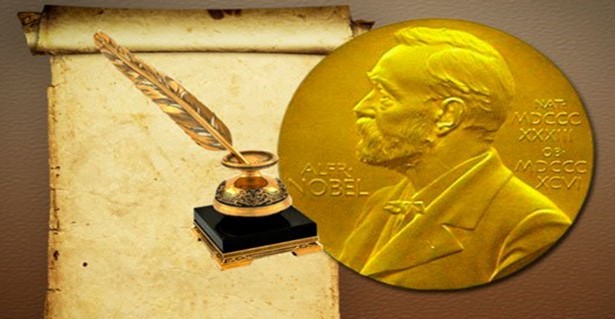
On 27 November 1895 in Paris, Swedish chemist, engineer, and inventor of dynamite Alfred Nobel (1833–1896) signed the final version of his famous will. According to this document, most of his fortune was to be used to establish a fund and create a prize to encourage pioneers in the fields of physics, chemistry, physiology and medicine, as well as literature, and those who had done the most for the benefit of peace during the previous year, regardless of nationality. He earned a tremendous fortune, yet feared that future generations would remember him only as the creator of explosives. Therefore, in his 1895 will, he ordered that annual prizes be awarded to those who had “conferred the greatest benefit on humankind.”
The idea of establishing the Nobel prize was inspired by chance. In 1888, he read in a French newspaper an obituary mistakenly published about him under the headline “the merchant of death is dead.” This article forced him to reflect on how humanity would remember him. As a result, he drafted a will stating that all his property should be converted into liquid assets and the collected capital placed in a reliable bank. The income from the investments was to belong to a fund that would annually distribute it in the form of prizes to those who, during the previous year, had rendered the greatest service to humanity. On 10 December 1896 Alfred Nobel died from a stroke, and this date was later declared Nobel Day. At the time of his death, his fortune was estimated at 33 million kronor. After the will was opened, it turned out that almost all of his wealth was inaccessible to his relatives. Therefore, the practical implementation of his will proved difficult. Nobel had requested that nearly all his money be transferred into securities and used to create a fund that would manage the portfolio and allocate the profit to reward those who had brought the greatest benefit to humanity.
In 1900 the Nobel foundation was established to finance and organize the prize. Several new rules were considered: for instance, the Peace Prize could be awarded not only to individuals but also to organizations working to make the world a better place. In 1974 another rule was introduced: the Nobel Prize is not awarded posthumously, although one exception was made when a laureate passed away just a few hours before the ceremony. It is well known that the Nobel Prize is not awarded immediately after a discovery is made. The invention must prove its effectiveness in practice. For example, British microbiologist Alexander Fleming discovered penicillin in 1928 but received the prize in 1945. The antibiotic developed thanks to this discovery saved many lives during the war.
The Nobel prize is the most renowned and prestigious award in the world. It is presented for outstanding scientific research, revolutionary inventions, and significant contributions to culture and the development of society. The Nobel Prize is awarded in several fields: physics, chemistry, physiology or medicine, literature, and peace. This choice reflects the disciplines that most interested Alfred Nobel during his lifetime. While studying his own illness, he became fascinated by medicine, which may explain the inclusion of the “physiology or medicine” category.
There is also a separate award established by the Bank of Sweden, granted for achievements in economic sciences in memory of Alfred Nobel. Formally, it is not a Nobel Prize, since it is not funded from Nobel’s bequest. However, organizationally it falls under the Nobel Prize framework, and its recipients are also called “Nobel laureates.”
Institutions awarding the prizes.
• The Royal Swedish academy of sciences (prizes in physics, chemistry, and economics)
• The Royal Caroline medico-surgical Institute (prize in physiology or medicine)
• The Norwegian Nobel committee appointed by the Norwegian Parliament (Peace Prize)
Candidates are selected by special Nobel committees at various research centers, academies, and institutes. Each committee consists of five specialists from different fields. Nominees may be proposed by certain designated individuals, including past Nobel laureates. Up to 300 candidates may be nominated in each category. The Nobel Committees submit their recommendations to the organizations awarding the prizes. The only exception is the Peace Prize, which is decided directly by the Norwegian Nobel Committee. Candidates may be nominated more than once. The Nobel Prize consists of a gold medal, a diploma, and a large monetary award, which laureates often donate to charity. The commemorative medal depicts Alfred Nobel and a symbol representing the field in which the achievement was made. The name of the laureate is also engraved on the medal.
Interesting facts.
• The first Nobel Prize ceremony took place in 1901.
• By 2025, 627 prizes had been awarded.
• There are 1,026 Nobel laureates worldwide, including 28 organizations.
• Arthur Ashkin received the Nobel Prize at the age of 96, becoming the oldest laureate, while the youngest, Malala Yousafzai, was only 17.
• The Nobel Prize was awarded posthumously once: the laureate died just hours before the ceremony.
Laureates receive a gold medal, a diploma, and a monetary award (in 2025 – 11 million Swedish kronor, approximately 1.2 million USD). The award ceremony takes place on 10 December – the anniversary of Alfred Nobel’s death – in Oslo (peace prize) and Stockholm (all other prizes). During the following six months, the laureates deliver lectures in Oslo and Stockholm on the research for which they were recognized.
The Nobel Prizes cannot acknowledge even a small portion of the achievements made each year across diverse fields due to the limited number of categories. Nevertheless, Alfred Nobel achieved his goal – for most people around the globe, his name is associated not with dynamite, but with groundbreaking discoveries and actions that make our lives better.
Department of propaedeutics of children diseases