THE ADDRESS OF PRESIDENT OF THE REPUBLIC OF TAJIKISTAN, HIS EXCELLENCY EMOMALI RAHMON
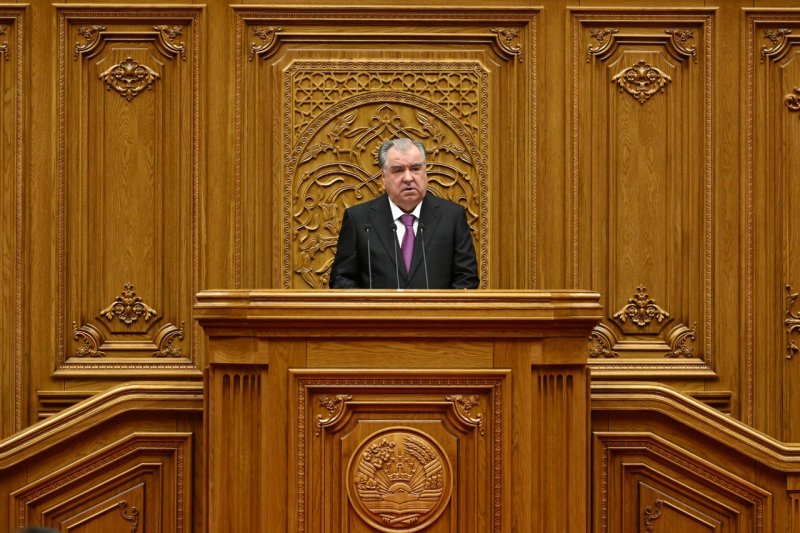
On December 28, 2024, the President of the Republic of Tajikistan, His Excellency Emomali Rahmon, delivered his annual Address to the Majlisi Oli and the citizens of Tajikistan, wherein he outlined the principal objectives of the nation's domestic and foreign policy for the forthcoming period.
One of the key themes in the annual address delivered by the President of the Republic of Tajikistan, Emomali Rahmon to the Majlisi Oli and the citizens of the country for 2024 was education. The President emphasized the modernization of the educational system, the enhancement of the quality of personnel training, and the promotion of equitable access to education for all segments of the population.
The primary focus areas within the education sector include:
1. The President underscored the necessity of revising curricula and academic programs across all levels of education. Particular emphasis was placed on the incorporation of advanced technologies, digitalization, and the alignment of the education system with international standards.
2. Enhancing the qualifications of educators: To ensure the delivery of high-quality instruction, the following proposals were made:
Strengthening initiatives for the professional retraining of teachers;
Expanding the availability of professional development courses;
Creating opportunities for the continuous professional advancement of educators.
3. To enhance the learning environment, a program aimed at constructing new schools and renovating existing educational institutions, particularly in remote areas, was launched in 2024.
4. The President highlighted the significance of incorporating modern technologies, including:
The development of digital educational platforms;
Equipping schools and universities with state-of-the-art facilities;
Expanding internet access in rural regions.
5. Special Focus on Children from Low-Income Families
The necessity of ensuring equitable access to education for all segments of the population is underscored. To achieve this goal, the following measures are planned:
- Allocation of scholarships;
- Provision of textbooks and other essential materials to schoolchildren;
- Expansion of the network of boarding schools and residential institutions for children from remote regions.
6. Advancement of Higher Education and Scientific Research
- Augmenting funding for scientific research;
- Supporting young scientists and innovators;
- Expanding international collaboration between Tajik universities and institutions abroad.
7. Fostering Patriotism and Morality
The President emphasized the significance of imparting high moral and patriotic values to the youth through educational initiatives.
Education as a Priority in Tajikistan's State Policy
Education remains a fundamental priority within the framework of Tajikistan's state policy. The President of the Republic of Tajikistan, His Excellency Emomali Rahmon has expressed confidence that ongoing reforms in this sector will enhance the training of qualified professionals capable of contributing to the nation’s sustainable development.
Tajikistan's education policy emphasizes improving the quality and accessibility of education while ensuring the preparation of skilled specialists to meet the demands of various economic sectors.
Educational Institutions
As reported in the 2024 statistical compendium Education in the Republic of Tajikistan, the country boasts an extensive network of educational institutions. These include pre-school, general education, primary, secondary, and higher vocational institutions, strategically distributed across different regions.
Higher Education: Since gaining independence, over 250,000 women in Tajikistan have completed higher education, demonstrating notable progress in advancing gender equality within the educational sector.
Outstanding Students: During the 2023-2024 academic year, 1,417 graduates from higher education institutions in Tajikistan were awarded diplomas with honors, highlighting the exceptional quality of student training and academic achievement.
Study Abroad: In the 2023-2024 academic year, 9,567 Tajik students enrolled in higher education institutions across the Russian Federation, underscoring the robust international collaboration within the field of education.
Legislative Developments:
In 2024, amendments were introduced to the Law of the Republic of Tajikistan “On Education” to enhance the national education system. Notably, education for grades 10-11 (general secondary education) was made compulsory. Additionally, provisions were established to allow students who choose not to continue at school to pursue education in colleges and technical institutions.
International Cooperation
Tajikistan actively fosters cooperation with foreign countries in the field of education. Annually, over 10,000 Tajik citizens enroll in prestigious universities and institutes abroad, facilitating the exchange of knowledge and enhancing the qualifications of specialists.
Conclusion
The education system in Tajikistan is undergoing significant development and reform. The state is striving to improve the quality of education, expand accessibility, and integrate the system into the global educational landscape. Nonetheless, challenges remain, including the need to reduce dropout rates and align the education system with the evolving demands of the labor market.
N. Sh. Aliyeva
Head of the Russian Language Department