TAJIKISTAN'S ROLE AND POSITION IN THE MODERN WORLD
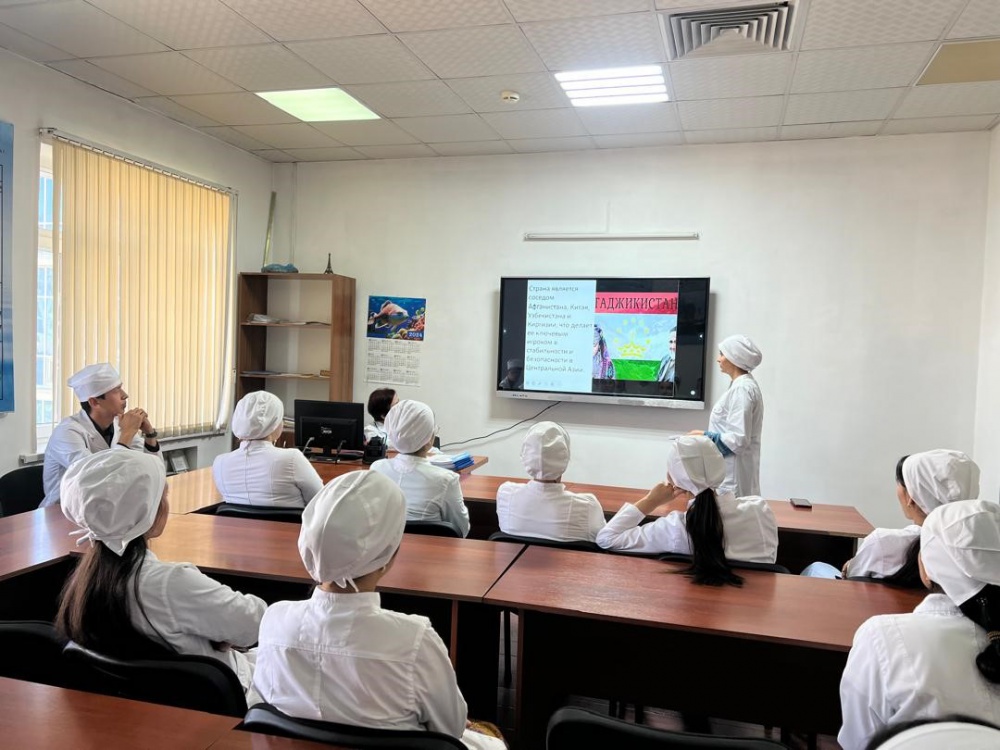
On September 28, 2024, the department of propaedeutics of children’s diseases at the Avicenna Tajik State Medical University under the supervision of assistant professor and candidate of medical sciences Khaidarova O.F., was conducted an open lesson titled "Tajikistan's Role and Position in the Modern World". The session involved department staff and third-year students from the 4th and 5th curatorial groups of the pediatric faculty.
Since gaining independence, the Republic of Tajikistan has positioned itself in international relations as an autonomous entity under international law, declaring its commitment to achieving lasting peace as a fully sovereign state.
When analyzing the role and position of Tajikistan in the modern world, it is essential to consider its geopolitical significance, economic progress, regional relations, and socio-cultural distinctiveness. The country is endowed with abundant water resources, including numerous rivers and lakes, which contribute to the growth of hydropower as a key development sector. Additionally, Tajikistan draws international attention through its rich cultural heritage, language, and artistic traditions, facilitating cultural exchange and enhancing global understanding. The nation boasts a wealth of architectural monuments, as well as ancient cultural and artistic legacies, creating ample opportunities for tourism development and the global sharing of knowledge and experience. Tajikistan's unique natural landscape further enhances its appeal.
The President emphasized that the implementation of national strategies and programs in recent years has led to an increase in state budget revenues, a reduction in poverty levels, and an overall improvement in the quality of life for citizens.
The speeches of the President of Tajikistan, Honorable Emomali Rahmon at international and regional forums are consistently grounded in constructive proposals and initiatives. These initiatives primarily focus on ensuring security, fostering sustainable collective development, enhancing intergovernmental cooperation, and improving the welfare of the region's populations.
Department of propaedeutics of children’s diseases
translated by Ismoilov