OPEN LESSON DEDICATED TO THE MEHRGON FESTIVAL AT THE DEPARTMENT OF PROPAEDEUTICS OF CHILDREN’S DISEASES
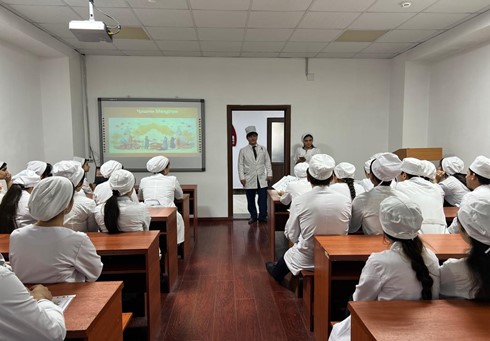
On October 14, 2025, at the department of propaedeutics of children’s diseases of the Avicenna Tajik State Medical University, an open lesson dedicated to the topic “Mehrgon Festival” was conducted by the department assistants — A. Giyosov, G. Murodov, and N. Ashurova — with the participation of the department staff and third-year medical students of groups 12, 16, and 17. The students of the mentioned groups presented their reports with meaningful and engaging content for all attendees.
The Mehrgon festival, along with Navruz, Sada, and Tirgon, is considered one of the most ancient celebrations among the Iranian peoples. This festival is held on the 16th day of the month of Mehr, which was also called Mehr Day, corresponding to October 8th in the Gregorian calendar. In the calendar of our ancestors, every day had its own specific name, and twelve of these names were identical to the names of the months. Whenever the name of the month and the day coincided, people celebrated the occasion with joy.
The word Mehr in ancient Iranian mythology appears in the form of Mitra — the deity of light, brightness, and fidelity to promises. In ancient sources, this festival is also mentioned as Mitrekana. The Mehrgon festival has been preserved since very ancient times, dating back to the era when the Aryan tribes practiced Mithraism.
Various legends and stories about the origin of Mehrgon are found in historical and literary sources. Ferdowsi, in his Shahnameh, provides fascinating information about the festivals and traditions of ancient Iranians and recalls them with deep love and respect for his ancestors’ heritage. He associates the first day of King Fereydun’s reign with the day of Mehrgon and attributes the beginning of this celebration to him.
In the writings of both Persian and Arab historians, numerous descriptions of the Mehrgon celebration can be found. On this day, the mobadan mobad (chief priest) would bring before the king a precious ruby dish containing lemons, sugar, lotus flowers, apples, white grapes, and seven myrtle leaves, reciting a prayer under his breath.
During the Samanid dynasty, the observance of Iranian festivals such as Navruz, Sada, and Mehrgon reached its peak. Poets of this era — Rudaki, Daqiqi, and Ferdowsi — praised the golden autumn season and the Mehrgon festival in their verses, celebrating it as a magnificent royal festivity.
In the era of independence, under the initiative and guidance of the Leader of the Nation, the President of the Republic of Tajikistan, His Excellency Emomali Rahmon, the Tajik people have succeeded in reconnecting with the essence and spiritual heritage of their ancestors. Many ancient festivals, ceremonies, and artistic traditions have been revived and enriched. Today, Mehrgon, alongside Navruz, is celebrated throughout the country with great splendor and pride. It has become a major event promoting the spirit of diligence, patriotism, and humanity among farmers, gardeners, and all hardworking citizens.
Department of propaedeutics of children’s diseases