


MONKEYPOX – AN INTERNATIONAL PROBLEM
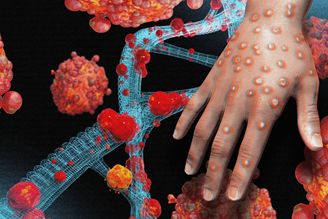
On August 14, 2024, WHO declared the monkeypox outbreak an international problem. According to WHO data, since the beginning of 2024, more than 14,000 cases of infection have been registered worldwide. In the first two-thirds of the current year, the spread of monkeypox has exceeded that of 2023.
A new outbreak of monkeypox has been recorded in Africa. The infection has already spread beyond the African continent. On August 15, the first case of monkeypox was registered in Sweden. Three days later, the disease was reported in the Philippines, prompting WHO to declare the situation an emergency.
Previously, the virus was only found in Central and West African countries. Since 2003, isolated cases began to be registered in other countries connected with tourist trips to Africa. In 2022, a global outbreak occurred outside Africa, affecting almost all countries and being linked to human-to-human transmission. From January 2022 to June 2024, 99,176 cases of monkeypox were recorded worldwide. However, these figures may be inaccurate and may not reflect the true scale of the problem. Since the beginning of 2024, 228,000 cases have been registered in African countries, according to data from the African Centers for Disease Control and Prevention. During this period, 622 deaths were reported. Over the past week, the number of infections has increased by 200%.
Monkeypox (Mpox) is an acute viral disease characterized by a rash all over the body, swollen lymph nodes, weakness, chills, fever, headache, and muscle and joint pain. It is most commonly transmitted through close physical contact and inhalation of particles from infected mucus and saliva.
The disease was first mentioned in 1958 when several outbreaks occurred among laboratory crab-eating macaques. The first human case was recorded in 1970 in a child in the Democratic Republic of the Congo. The monkeypox virus belongs to the same genus as the smallpox and cowpox viruses, although its exact origin remains unknown.
The monkeypox virus is classified as a zoonotic disease, meaning it can be transmitted from animals (most often) to humans, as well as from human to human. The primary hosts of the virus are non-human primates and rodents, including squirrels, tree squirrels, dormice, and Gambian rats.
Modes of transmission:
Contact: Through touching the rash of an infected person (including an infected animal), their bodily fluids, such as through kissing, sexual contact, scratches, or bites, or touching their belongings and clothing; currently, this mode of transmission is more common among homosexual men.
Aerosol: Through inhaling infected particles of saliva and mucus during face-to-face communication.
Transplacental: An infected pregnant woman can transmit the virus to her fetus, with possible transmission during childbirth and postnatally during close contact with the newborn.
Alimentary: Through preparing and consuming the meat of an infected animal.
Previously, it was believed that patients were contagious from the onset of symptoms until the rash had completely disappeared and the skin had healed. However, in November 2022, scientists disproved this hypothesis: they found that 53% of patients were infected by individuals who had no symptoms. Recently, one infected person has been spreading the virus to more people than before. This is likely due to the loss of immunity following the cessation of smallpox vaccinations.
Symptoms of Monkeypox:
The incubation period lasts on average 6-14 days, rarely ranging from 5 to 21 days. During this time, a person may feel fine but can still be contagious. The symptoms of monkeypox are similar to those of smallpox, but monkeypox is much milder, with asymptomatic cases possible. Smallpox has not been reported since 1980. Monkeypox can begin with malaise, weakness, chills, fever, headache, muscle and joint pain, and sometimes a sore throat and cough. In the early days, peripheral lymph nodes in the neck, armpits, and groin become enlarged. They are soft and usually painless. Within a few days, moderately painful rashes appear on various parts of the body, including the mucous membranes of the mouth and genitals.
Rashes develop in several stages:
Spot – 1–2 days;
Papule (nodule) – 1–2 days;
Vesicle (blister) – 1–2 days;
Pustule (raised pimple, firm to the touch) – 5–7 days;
Scabs (itchy crusts that fall off after a week) – 7–14 days.
The most characteristic type of pox rash is a well-defined papule, often with a central depression. The number of rash elements can range from 1–2 to several thousand. Usually, there are more rashes on the face, hands, and feet; they can even appear on the palms and soles, which is uncommon in most other infectious diseases except for enterovirus infection. Rashes on different parts of the body are similar in form and stage of development. Sometimes the disease starts with rashes, and other symptoms appear later. In rare cases, there may be only a rash without other obvious signs. The course of the disease is usually benign, with the skin gradually healing. After the scabs fall off, small pits or scars and slight darkening or lightening of the skin may remain. The duration of the illness is 2–4 weeks.
High-risk groups for more severe disease:
Patients with immunodeficiency (AIDS);
Children under 8 years old;
Patients with skin diseases;
Pregnant and breastfeeding women.
Limited data suggest that the disease may be more severe in children: the rash is more widespread, intoxication is more intense, and complications develop more frequently, likely due to an insufficient immune response and the absence of smallpox vaccination.
Complications vary depending on the affected organ. They can include pneumonia, pyelonephritis, sepsis, encephalitis, and corneal infection.
Diagnosis
Monkeypox should be suspected if a patient has visited African countries, been in contact with people with the disease, or closely interacted with those infected within the last three weeks. A distinctive sign of monkeypox is a characteristic rash on the body and swollen lymph nodes during the prodromal period (from the first symptoms to the appearance of rashes).
Laboratory diagnosis:
Clinical blood test (decreased leukocytes, neutrophils, and platelets, increased lymphocytes and monocytes, increased leukocytes and neutrophils when bacterial flora is present, increased ESR);
Biochemical blood test (elevated creatinine, ALT, AST, and CRP);
PCR diagnostics (detection of the monkeypox virus in biological material such as blood, discharge from rashes, and scabs).
Prognosis and Prevention
For mild cases, the prognosis is favorable. With West African type infection, no more than 1% of patients die; with Central African type, around 10%. In recent years, the mortality rate has averaged 3–6%. For severe cases and those with comorbidities, the prognosis is serious: severe complications may develop, requiring hospital treatment. In both types of monkeypox, scarring may remain on the skin after recovery. Those who have been in contact with infected individuals should be monitored for 21 days from the time of contact. Symptoms that may raise suspicion include a body temperature rise to 38°C, chills and fever, swollen lymph nodes, and rashes on the body and mucous membranes. If symptoms appear, they should be reported to a doctor and self-isolation is necessary. If asymptomatic, in some countries, it is allowed to continue normal activities but not to donate blood, sperm, or organs. Animals in close contact with infected people should be isolated for 21 days from the last contact.
Non-specific preventive measures:
Avoid contact with people who have monkeypox or similar rashes (do not touch them, kiss, have sex, or use their dishes and belongings);
Wash hands more often with soap or use disinfectant sprays;
Wear a protective mask;
Avoid contact with live and dead rodents and primates in Central and West Africa.
Specific preventive measures:
In 2019, a monkeypox vaccine was developed and released, reducing the incidence by 10 times. Currently, there are three vaccines against monkeypox. However, WHO does not recommend mass vaccination. Vaccination should be administered only to those at risk, such as those who have been in contact with infected individuals.
Department of propedeutics children’s diseases
Translated by Ismoilov R.