
Medicinal herbs with antimicrobial properties
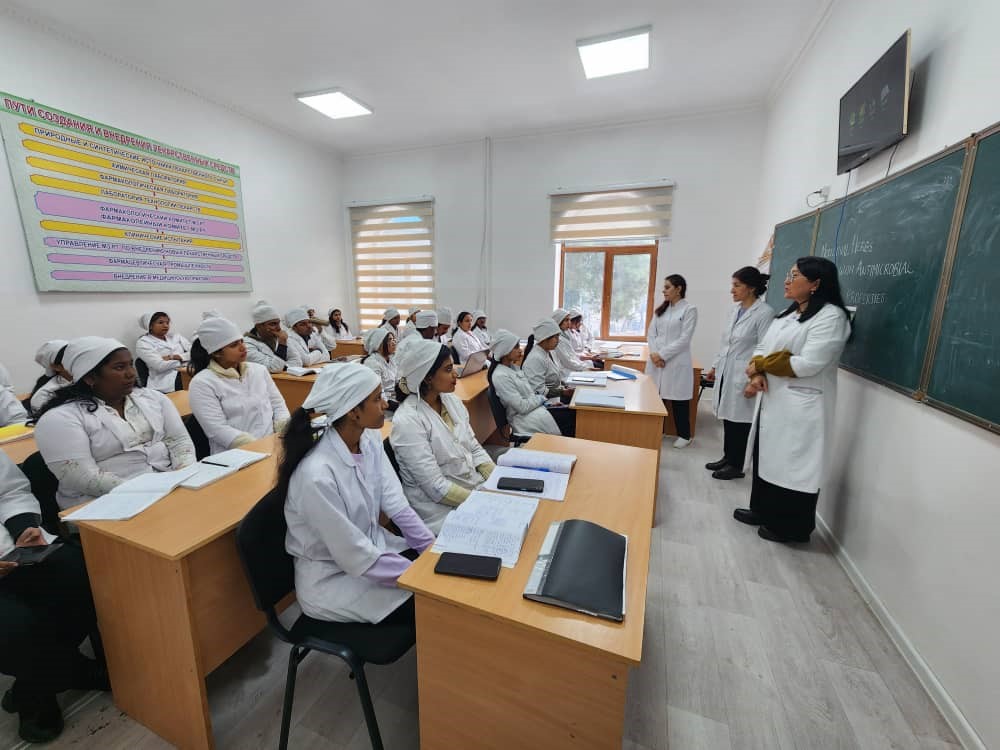
At the department of pharmacology of SEI «ATSMU» 18.12.24 year, an open lesson was held on the topic of “Medicinal herbs with antimicrobial properties” with the participation of the head of the department – Urunova M.V., assistants of the department – Kasymova P.V. and Boboeva M.J., other teachers of the department and students of the 1st and 2nd groups of the 3rd year of bachelors (teacher – Kasymova P.V). Presentation was prepared by students of group 1st: Siji Abhijith and Safi Rose.
Medicinal herbs have been used for centuries to treat various ailments, and recent research has increasingly confirmed their effectiveness. Many of these herbs possess antimicrobial properties, meaning they can inhibit the growth of or kill microorganisms such as bacteria, fungi, and viruses. This makes them valuable in combating infections and promoting overall health.
HOW IT WORKS:
Disrupting cell membranes or cell walls Interfering with metabolic process Boosting the immune system.
GARLIC Active compounds: Allicin, ajoene, and other organosulfur compounds. • Mechanism of Action: Allicin inhibits bacterial enzymes, disrupts cell membranes, and interferes with DNA replication. Ajoene inhibits fungal growth by disrupting ergosterol synthesis.
Garlic has been used for centuries as a natural remedy for various ailments.
Modern research has confirmed its antimicrobial properties, making it a potential alternative or complementary treatment for certain infections.
The antimicrobial activity of garlic is primarily attributed to its sulfur-containing compounds, particularly allicin.
Allicin is formed when garlic is crushed or cut, activating an enzyme that converts alliin into allicin.
GINGER
Ginger has been used for centuries in traditional medicine for various purposes including as a potential antimicrobial agent. Modern research has shown that ginger does indeed possess antimicrobial properties, which are primarily attributed to its bioactive compounds, such as gingerols, shogaols, and zingerone.
Studies have shown that ginger can inhibit the growth of certain bacteria, including Staphylococcus aureus, Escherichia coli, and Salmonella enterica.
It has also demonstrated antifungal activity against Candida albicans, a fungus that can cause yeast infections.
Active compounds: Gingerol, shogaol, and other terpenoids.
Antimicrobial Activity: Inhibits the growth of bacteria, fungi, and yeasts.
TURMERIC (curcuma longa)
Active Compounds: Curcumin and other curcuminoids.
Mechanism of Action: Curcumin inhibits bacterial growth by disrupting cell membranes and interfering with DNA replication. It also has anti-inflammatory and antioxidant properties.
The antimicrobial activity of turmeric is primarily attributed to curcumin, its principal active compound. Curcumin has been shown to inhibit the growth of various bacteria, fungi, and viruses. It achieves this through multiple mechanisms, including:
*Disrupting bacterial cell membranes: Curcumin can interact with the lipid bilayer of bacterial cell membranes, leading to their disruption and ultimately cell death.
*Inhibiting bacterial protein synthesis: Curcumin can interfere with the process of protein synthesis in bacteria, preventing them from producing essential proteins for survival and replication.
One of the major challenges in antimicrobial therapy is the emergence of antimicrobial resistance.
Microorganisms can develop resistance to antimicrobial drugs through various mechanisms, such as: Mutation: Changes in the genetic material of the microorganism can alter the target of the drug or inactivate the drug.
Enzyme Production: Microorganisms can produce enzymes that inactivate the antimicrobial drug.
Reduced Drug Uptake: Microorganisms can decrease the uptake of the drug, reducing its effectiveness.
Efflux Pumps: Microorganisms can develop efflux pumps that actively pump out the antimicrobial drug from the cell.
Antimicrobial resistance is a serious public health concern, as it can make infections difficult to treat and increase the risk of mortality.
Department of pharmacology