

INTERNATIONAL CHILDREN’S DAY
“Children are the most valuable resource of humanity.”
Herbert Hoover
International Children’s Day, celebrated annually on June 1, is aimed at promoting the well-being of children. It is observed in many countries around the world, including Tajikistan, Russia, Belarus, Ukraine, Lithuania, Kazakhstan, the Czech Republic, the USA, France, and others. June 16 is observed as the Day of the African Child, and August 16 as Children’s Day in Paraguay.
Similar holidays are celebrated in other countries:
· April 23 in Turkey – National Sovereignty and Children’s Day
· May 5 in Japan – Children’s Day (originally Boys’ Day)
· November 20 by UNICEF and the UN – World Children’s Day (in honor of the adoption of the Convention on the Rights of the Child)
· September 20 in Germany – the official date for unified Germany
· April 30 in Mexico – Children’s Day
The main goals of the holiday:
· To draw attention to children's rights, which should not remain just on paper but must be actively protected – in families, schools, hospitals, courts, and public policy, every child has the right to:
· life, health, and education;
· protection from violence and exploitation;
· freely express their opinion;
· care and respect for their individuality.
· To express solidarity with children in difficult life situations and encourage people not to remain indifferent but to support those who cannot care for themselves. The holiday highlights children affected by:
· armed conflicts,
· domestic violence,
· poverty,
· orphanhood,
· natural disasters.
· To encourage adults to take action. On this day, people:
· hold charity events;
· organize activities for orphans and children from disadvantaged families;
· launch campaigns to protect childhood.
· To celebrate the value of childhood itself. This day is not only about problems but also about joy, laughter, games, and discoveries. Children are full-fledged individuals who must be respected, supported, and loved.
The Symbolism of the Day:
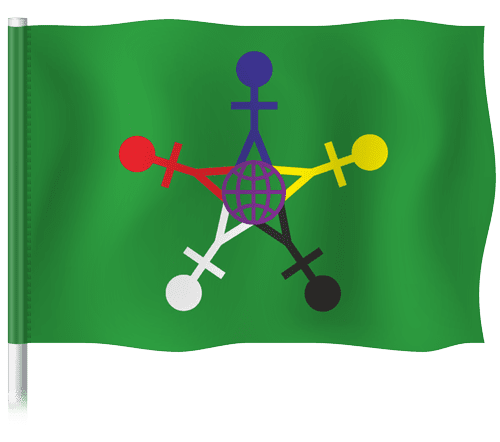
International Children’s Day has its official flag – five colorful human figures on a green background with a symbol of Earth in the center.
Green symbolizes freshness and harmony, the figures represent diversity and tolerance, The Earth symbolizes our common home.
The idea for the holiday emerged after World War II, when millions of children were left without parents, homes, access to education, or medical care. These tragic events highlighted the vulnerability of children and the urgent need to protect their rights. The holiday was officially established in 1949 in Paris at a meeting of the International Democratic Federation of Women. The idea was widely supported, and by June 1, 1950, the first International Children’s Day was celebrated in 51 countries. The UN endorsed the initiative.
Traditions and Activities:
Children’s Day is celebrated with:
· Festivals, concerts, exhibitions, fairs, contests, and family events in parks and squares.
· Balloons are often distributed to children.
Children take part in:
· drawing contests,
· theatrical performances,
· craft exhibitions,
· art, music, and dance workshops.
· Charity and social actions are held to:
· protect children’s rights,
· prevent violence,
· improve living conditions,
· provide gifts and support to children in orphanages, large or low-income families.
Human rights organizations, media, and officials publish statements, hold press conferences and round tables. It is a day to help those most in need – children from shelters, with disabilities, in crisis situations, or from large families. The support can come in many different forms.
Interesting facts:
ü According to one version, the origins of the holiday trace back to the Chinese Consul General in San Francisco, who on June 1 organized a Dragon Boat Festival for Chinese orphans.
ü On November 20, 1959, the UN General Assembly adopted the Declaration of the Rights of the Child, urging states and organizations to uphold these rights.
ü On November 20, 1989, the Convention on the Rights of the Child was adopted – a document defining the rights of all children and the responsibilities of adults.
ü UNICEF's cooperation with Tajikistan began in 1993, with the opening of its office and the signing of an agreement with the Government of the Republic of Tajikistan. UNICEF helps protect children’s rights and supports children and mothers in difficult situations.
ü International Children’s Day is one of the longest-standing children's holidays – over 70 years old.
ü The official emblem of the day is a globe, five children holding hands, and a bright sun, symbolizing unity, peace, and the protection of children across the globe, regardless of country, race, gender, or social status.
ü Other symbols include balloons (representing lightness, dreams, and freedom), toys and teddy bears (symbols of care and comfort), and handprints (a reminder of individuality and presence).
“A person who truly respects the human personality must respect it in their child from the moment the child becomes aware of their own ‘self’ and distinguishes themselves from the outside world.”
D.I. Pisarev
Department of propaedeutics of children’s diseases