
DUSHANBE ON THE OCCASION OF THE 35TH ANNIVERSARY OF THE STATE INDEPENDENCE OF THE REPUBLIC OF TAJIKISTAN
Independence for every nation is not merely a historical date, but the beginning of a new stage in the path toward national identity, state-building, and sustainable development. For the Republic of Tajikistan - State Independence, achieved in 1991, created the opportunity for the country to choose its own independent political, economic, and social path.
The first years following Independence were marked by serious political and economic challenges. The collapse of the Soviet economic system led to the disruption of production ties, a reduction in financial resources, and a decline in the population’s standard of living. In such circumstances, the capital city, which was expected to serve as the driving force of the country’s development, itself became a vulnerable environment. At that time, the city’s infrastructure did not meet the demands of the era. Roads were deteriorated, public transportation was limited, communal services were unstable. Shortages of electricity, water, and other essential services negatively affected the daily lives of residents. Construction activities in the city had come to a halt, and the appearance of the city remained unchanged.
Nevertheless, it was precisely during this difficult period that the foundations for the city’s future revival were laid. Efforts to restore political stability, revive the economy, and strengthen state institutions gradually created the conditions for Dushanbe to overcome the crisis stage and transform into a new city.
The rapid development of Dushanbe during the years of Independence is not accidental. Above all, it is the result of the purposeful policies of the Founder of Peace and National Unity — Leader of the Nation, President of the Republic of Tajikistan. The experience of recent years has shown that without clear strategies and their consistent implementation, achieving such a level of development would have been impossible.
After political stability had been restored, the Head of State made the development of the capital one of the priority directions of national policy. This initiative was based on the understanding that the capital is not only an administrative center, but also the country’s main economic and social driving force on the international stage. In this regard, special state programs were launched to modernize infrastructure, improve the urban environment, and raise the standard of living of the population.
The development and implementation of medium- and long-term development programs made it possible to carry out major projects in an organized and phased manner. The construction of roads, bridges, residential complexes, and social institutions was undertaken within the framework of these programs.
Another factor that deserves special mention is the improvement in the level of urban governance. The introduction of modern management methods, the use of digital technologies, and the enhancement of public services have led to greater efficiency in the activities of municipal authorities. This process, especially in recent years during the mayoralty of Rustam Emomali, has taken on a new dimension, contributing to increased public confidence and an improved social environment.
One of the most notable indicators of Dushanbe’s progress during the years of Independence is the profound transformation of its infrastructure and urban appearance. Whereas at the beginning of Independence the city faced serious infrastructural limitations, today it has become a modern capital with an extensive network of services and contemporary buildings.
Over the 35 years following Independence, dozens of kilometers of new roads have been constructed and renovated throughout the city. Major transport bridges, overpasses, and highways have been built, significantly reducing problems related to urban traffic movement. These changes have not only made transportation easier, but have also had a positive impact on economic development.
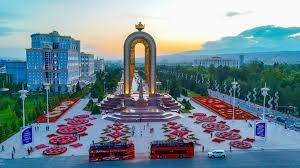
At the same time, the architectural image of Dushanbe has undergone a complete transformation. High-rise buildings, business centers, administrative structures, and cultural complexes have gradually replaced old constructions. Today, the city of Dushanbe, with its new appearance in which modern elements are harmoniously blended with national traditions, captivates the heart of every visitor.
The social development of Dushanbe during the years of Independence is considered one of the key directions of the country’s overall transformation. Over the 35 years of the State Independence of the Republic of Tajikistan, significant changes have taken place in this sphere, directly improving the standard of living of the population.
In the field of education, the number of educational institutions increased considerably. New schools, gymnasiums, and universities were established, expanding educational opportunities for young people.
Noticeable progress has also been made in the healthcare sector. The construction and renovation of hospitals, diagnostic centers, and specialized clinics contributed to improving the quality of medical services. The gradual introduction of modern medical technologies significantly enhanced the quality of treatment.
The spheres of culture and sports also developed in the city of Dushanbe. Theaters, libraries, museums, and cultural centers became more active and dynamic. At the same time, cultural events of national and international significance contributed to promoting Tajik culture on the global stage. In addition, the development of sports and the construction of sports facilities had a positive impact on encouraging a healthy lifestyle among young people.
During the years of Independence, Dushanbe has become not only a political and economic center, but also one of the main driving forces behind the formation of national identity. Over the past 35 years, the city’s role in the revival of cultural values and the strengthening of national self-awareness has increased significantly, and this process continues to advance rapidly.
A brief analysis of these areas shows that the development of Dushanbe during the 35 years of the State Independence of the Republic of Tajikistan has undergone a complex yet strategic path of transformation. From a city with limited infrastructure and serious socio-economic problems, Dushanbe has gradually evolved into a modern, developing center with a renewed image.
The experience of 35 years of Independence demonstrates that, owing to the wise policies of the Esteemed Leader of the Nation and the efforts of the Mayor of Dushanbe, honorable Rustami Emomali, the capital of the country has today reached a high level of development and has been recognized as one of the safest cities in the world.
Ahroriyon Zarina Asror
Vice-rector for educational affairs