

9 MAY — A DAY OF MEMORY, COURAGE, AND PEACE.
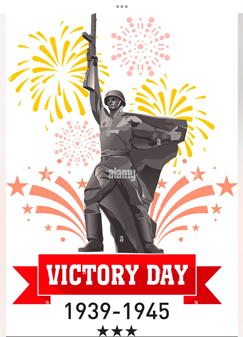
9 May — Victory Day — occupies a special place in the history and collective memory of many nations. It is a day that symbolises courage, heroism, resilience, patriotism, and the triumph of peace over destruction. On this solemn and meaningful occasion, we honour the memory of those who fought bravely during the Second World War and express our deepest gratitude to all who contributed to the Great Victory.
The Second World War became one of the most tragic and devastating periods in human history. Millions of lives were lost, countless families experienced grief and suffering, and entire cities and communities were destroyed. Yet, despite unimaginable hardship, people demonstrated extraordinary strength, unity, and determination in defending their homeland, protecting human dignity, and preserving freedom for future generations.
Victory was achieved not only through military courage on the battlefield, but also through the tireless efforts of workers, doctors, nurses, teachers, scientists, and ordinary citizens who worked selflessly on the home front. Every contribution — whether at the front lines or behind them — became part of a shared struggle for peace and justice. The unity, solidarity, and perseverance shown during those difficult years remain a powerful example for humanity today.
On this day, we pay tribute to veterans whose bravery, sacrifice, and dedication made victory possible. Their heroism continues to inspire younger generations and serves as a reminder of the values of responsibility, honour, and devotion to one’s people and country. We also bow our heads in memory of those who never returned from the war, whose names and deeds will forever remain in history.
For universities and educational institutions, Victory Day carries profound educational and moral significance. The academic community has an important responsibility in preserving historical truth, promoting humanitarian ideals, and educating students in the spirit of peace, tolerance, respect, and international understanding. By studying and remembering the lessons of history, we strengthen our commitment to preventing future conflicts and building a society based on knowledge, compassion, and mutual respect.
Today’s younger generation must not only remember the sacrifices made by previous generations, but also continue to uphold the ideals for which they fought — peace, unity, justice, and human dignity. Historical memory plays a vital role in shaping civic consciousness and encouraging responsibility for the future of society and the world.
Victory Day reminds us that peace is one of humanity’s greatest values. It teaches us the importance of unity in difficult times and inspires us to preserve harmony among peoples and nations. The courage and resilience demonstrated during the war years continue to serve as an enduring example of the strength of the human spirit. On this memorable occasion, we express sincere gratitude to all veterans and honour the sacred memory of those who sacrificed their lives for freedom and peace. May their courage, dedication, and selflessness never be forgotten.
We extend our heartfelt wishes for peace, good health, prosperity, stability, and a future filled with hope, harmony, and mutual understanding for all people around the world.
Assistant of the Normal Physiology Department Rajabova Nishasta Khushvaqtshoevna, c.m.s., associate professor Arabova Z.U
PEACE — THE GREATEST TREASURE OF HUMANITY
Peace is one of the greatest values of humanity and the foundation upon which society, education, science, culture, and human progress are built. Although people often perceive peace as something natural and permanent, history repeatedly reminds us that it is fragile and must be protected, appreciated, and preserved by every generation.
The modern world continues to face numerous challenges, including armed conflicts, political instability, social inequality, and humanitarian crises. These events demonstrate that peace cannot be taken for granted. It requires mutual understanding, tolerance, dialogue, and respect among individuals, nations, and cultures. Only through cooperation and unity can societies create conditions for stability, development, and prosperity.
The lessons of history clearly show the devastating consequences of war. Millions of lives have been lost, families destroyed, and entire communities displaced because of violence and conflict. The memory of past tragedies teaches humanity the importance of preventing hatred, intolerance, and division. Remembering these lessons encourages people to value human life, dignity, and freedom above all else.
Educational institutions play a particularly important role in promoting peace and humanitarian values. Universities are not only centres of knowledge and scientific advancement but also places where future generations learn responsibility, ethics, respect, and civic consciousness. Through education, young people develop critical thinking, cultural understanding, and the ability to engage in constructive dialogue — qualities that are essential for maintaining peace in society.
Peace also creates the conditions necessary for scientific discoveries, cultural exchange, innovation, and personal development. In peaceful societies, individuals are able to pursue education, contribute to their communities, and realise their potential. Without peace, sustainable progress becomes impossible.Today’s generation carries a special responsibility for the future of the world. Preserving peace begins with simple yet meaningful actions: respecting others, rejecting violence, supporting justice, helping those in need, and promoting understanding between people of different backgrounds and beliefs. Even small acts of kindness and humanity contribute to building a more peaceful society.
In a rapidly changing world, the value of peace becomes even more significant. Peace is not merely the absence of war; it is the presence of harmony, security, cooperation, and mutual respect. It allows humanity to move forward, overcome challenges, and create a better future for coming generations.
Therefore, preserving peace must remain one of the highest priorities of modern society. By learning from history, promoting education, and strengthening mutual understanding, humanity can continue to protect this precious value and ensure a stable and hopeful future for all.
Assistant of the Normal Physiology Department Rajabova Nishasta Khushvaqtshoevna, c.m.s., associate professor Shukurova N.Ya, assistant Akhmedova Sh.А.