THE MEHRGON HOLIDAY IS A SYMBOL OF ABUNDANCE, FRIENDSHIP, AND GRATITUDE TO NATURE
Mehrgon is one of the most ancient and beautiful holidays of the Tajik people, symbolizing abundance, kindness, mutual understanding, and gratitude to nature. Its roots go back thousands of years, to the ancient Persian and Tajik civilizations. The name of the holiday comes from the word "mehr" - meaning sun, love, and friendship. Mehrgon, along with Navruz, is considered one of the most revered national holidays.
The history of Mehrgon dates back over four thousand years. In ancient times, this day was celebrated after the completion of agricultural work, when the harvest was gathered and the earth was thanked for its gifts. People held festivities, sang songs, decorated dasturkhanas (gravestones), and shared their joy with neighbors. Mehrgon became a symbol of human harmony with nature, fertility, and human unity.
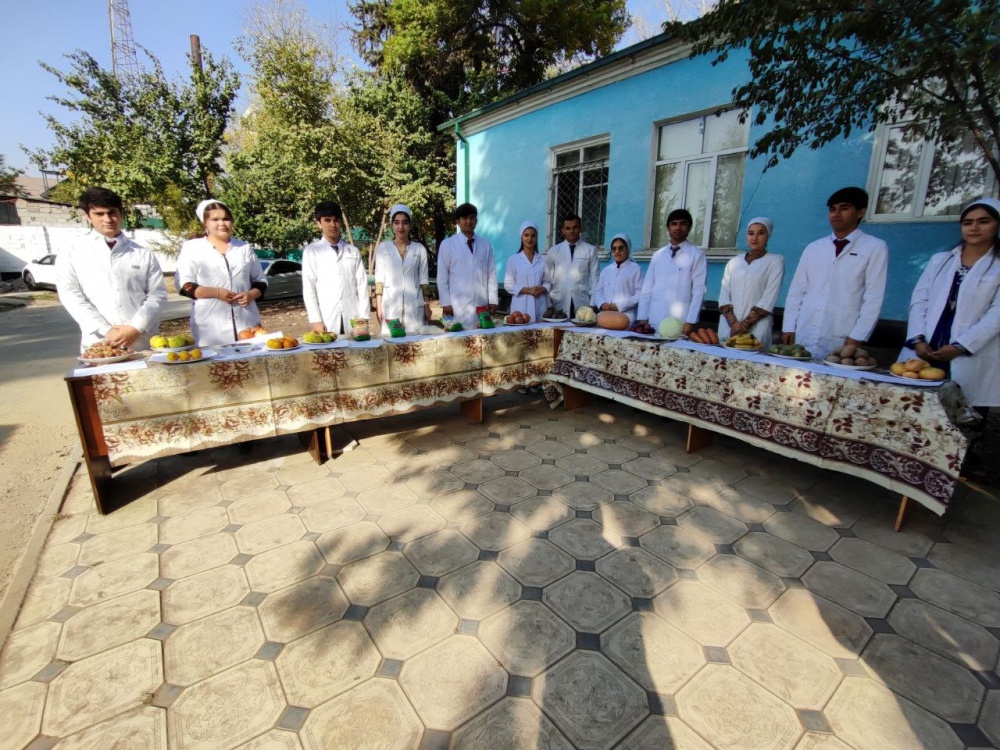
In honor of this ancient and cherished holiday, a celebratory gathering was organized at the Department of Radiology. The purpose of the event was not only to celebrate the national holiday but also to remind students and staff of the importance of preserving the cultural and spiritual traditions of the Tajik people.
Particular attention was paid to decorating the festive dasturkhon. It was richly decorated with the bounty of autumn: vibrant fruits-pomegranates, apples, grapes, figs, persimmons-and vegetables. Each element of the dasturkhon symbolized prosperity, well-being, and gratitude for the harvest.
At the end of the event, the faculty noted that such celebrations foster respect for traditions, enhance national identity, and create an atmosphere of friendship and warmth within the team.
Department of Radiology