
THE FESTIVAL OF SPRING EQUINOX
"Navruz with all its natural charm is an example of high culture and since ancient times has generated a fertile moral basis for friendship, mutual understanding and unity of people. This ancient holiday, which testifies to the ancient history of the Tajik people, is not associated with any religion and faith, is not subordinated to any ideology, religious or sectarian worldview, but is one of the rare holidays of mankind, celebrated by various small and large peoples of the planet."
Emomali Rahmon.
Navruz is one of the most ancient spring holidays, rooted in the distant past of the peoples who lived in Central Asia, Iran, Iraq, Azerbaijan and other regions of the East, which has more than 6000 years of history. Nowruz is a holiday of renewal, spring awakening of nature and the beginning of a new year for many peoples of the East. It gives people an atmosphere of joy, unity and hope. joyful events in people's lives was the arrival of spring. Different peoples celebrated it in different ways. But everything is like a holiday of the revival of nature, the triumph of life, hopes for a generous harvest year.
Novruz - "New Day", symbolizes the arrival of spring, the beginning of a new stage of life, it is associated with the cult of the Sun and the name of the prophet Zarathustra. According to the teaching of "Avesta", every spring people should celebrate the appearance of life on earth, which originated "in six forms" - sky, earth, water, plants, animals and man. On September 30, 2009, Nowruz received the status of an international holiday and was included in the UNESCO List of Intangible Cultural Heritage. peace and harmony, love and kindness. Nowruz is a national holiday and has deep cultural and historical roots. Its celebration falls on the period of the vernal equinox, which usually falls on March 20 or 21, which symbolizes harmony and balance. In different countries, the date may shift by a day or two, since in some regions they are guided by the lunar or astronomical calendar, and somewhere they tie the celebration to the exact moment of the transition of the sun into the sign of Aries. The connection to the day of the vernal equinox is fundamentally important: it is believed that it is during this period that nature finally wakes up and a new life cycle begins. The idea of renewal is close to everyone: many people arrange a general cleaning at home, buy new clothes, cook dishes that symbolize fertility and abundance. cleansing. The ancient holiday of Nowruz has been harmoniously transformed into modern life and is an important link between the history and modernity of Tajikistan.
The day of the vernal equinox has a special energy: at this moment, the sunlight becomes more powerful than the darkness of the night, and people seem to gain strength for inner rebirth. Ancient farmers directly associated this period with the future harvest and prosperity: any care for the land was considered as a guarantee of well-being. Officially, Nowruz began to be celebrated as a religious holiday of Zoroastrianism in the First Persian Empire, which existed from 550 to 330 B.C. Gradually, the holiday spread beyond Persia and acquired new cultural features and rituals. The holiday has regional features: for example, in some places guests are treated to nuts and ripe fruits, in others - sweets with honey and nuts, and somewhere the holiday is accompanied by folk games and fairs.
The traditions of Nowruz reflect the idea of purification, renewal and welcoming spring in a joyful atmosphere. One of the most famous and common rituals is jumping over a fire, which symbolizes cleansing from negative emotions, thoughts, and resentments. Fire, according to beliefs, takes away everything dark and heavy from a person, allowing him to enter a new stage of life renewed and filled with good. In some countries, this ritual is complemented by water rituals - people wash themselves with spring water or make ceremonial offerings to the river element, symbolizing the connection with nature and its revitalizing power. It is customary to decorate houses with wheat shoots and primroses: spring flowers bring a sense of new life and a joyful revival of nature to the living space.
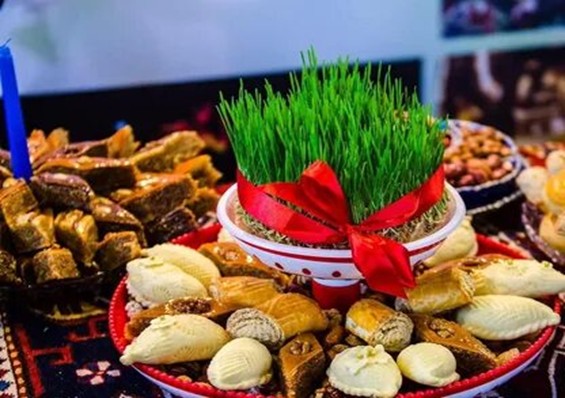
The central place in the celebration is occupied by the ceremonial table. There is a well-known ritual of "haft sin" - a festive table with seven components, the names of which begin with the Persian letter "sin" (grain sprouts, vinegar, spices, bread pudding, etc.), each of which has its own symbolic meaning: health, wealth, happiness, love, longevity... On this day, it is customary to generously treat guests and neighbors, to show hospitality. A festive meal expresses the idea of abundance, mutual respect and unity of people. On this day, people strive to share with each other the joy of life, the warmth of communication and hope for a fruitful future.
In Tajikistan, families usually put the yard and house in order in advance, decorate the home with spring flowers. An important element of preparation is the germination of wheat or barley: men and women select the grains, put them in a bowl with a damp cloth and watch how the tender shoots make their way to the light. The thicker and healthier the seedlings, the more successful, according to beliefs, the new year will be. On the table, the main place is occupied by sumalak - porridge made from sprouted grains, which is cooked all night in large companies.
Interesting facts about Nowruz
- The tradition of making sumalak dates back to ancient times and symbolizes fertility and prosperity.
- On the day of Nowruz, it is customary to plant trees and flowers, which symbolizes renewal and prosperity.
- In ancient times, the celebration of Nowruz lasted several days and included various rituals dedicated to the purification and blessing of the land.
- On Nowruz, bonfires are lit and people jump over the fire, which symbolizes deliverance from troubles and diseases.
- According to tradition, on this day, people wear new outfits to symbolize a new stage in life.
- In ancient times, Nowruz was associated with the beginning of the agricultural cycle and was considered an important day for farmers.
- In some regions, the celebration lasts for a whole week, with various sports, cultural and family activities.
- In 2009, UNESCO included Navruz in the list of the Intangible Cultural Heritage of Humanity.
- Nowruz symbolizes peace and harmony, and its celebration is actively supported by both state and international organizations.
"Today we are happy and proud to declare that during the period of independence, Navruz has become the good news of the beginning of a prosperous life, happiness and prosperity, a bright future for our country."
Emomali Rahmon
Department of propaedeutics of children's diseases