


AVICENNA’S CONTRIBUTION TO MEDICINE AND THE DEVELOPMENT OF DIAGNOSTICS
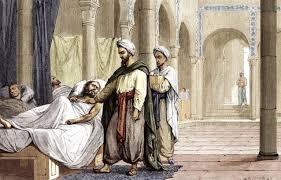
Avicenna, whose full name was Abu Ali al-Husayn ibn Abdullah ibn Sina, is one of the most outstanding figures in the history of world medicine. He lived in the 10th–11th centuries and became famous as a physician, philosopher, scientist, and thinker. His main medical work, “The Canon of Medicine,” was used for many centuries as one of the principal medical textbooks in the countries of the East and Europe. A particularly important place in this work is given not only to the treatment of diseases, but also to proper diagnostics, that is, the ability to recognize a disease, determine its causes, course, and possible consequences.
Avicenna’s contribution to diagnostics is especially important because he considered the patient not simply as a carrier of a separate disease, but as a whole organism. He believed it was necessary to take into account the patient’s age, lifestyle, nutrition, working conditions, climate, character of pain, appearance, condition of the skin, breathing, pulse, and bodily excretions. This approach is very close to modern clinical thinking, where a physician does not focus on only one symptom, but analyzes the entire clinical picture of the disease.
One of Avicenna’s main diagnostic methods was questioning the patient. He believed that a physician should carefully listen to the patient’s complaints, clarify when the disease began, how it developed, and what factors increased or decreased the symptoms. For example, in the case of pain, it was important to determine its location, character, duration, connection with food, movement, body temperature, or time of day. Today, this method is called taking a medical history. In fact, Avicenna emphasized that without proper questioning, it is impossible to make an accurate diagnosis.
Avicenna also paid great attention to examining the patient. He described the importance of the color of the face, the condition of the eyes, tongue, skin, facial expression, gait, body position, and the general appearance of the patient. By observing the patient’s appearance, the physician could suggest the severity of the disease. For example, paleness could indicate weakness, exhaustion, or blood loss; yellowish skin could indicate liver or biliary tract disease; redness of the face could be associated with fever, inflammation, or circulatory disorders. This observational approach remains one of the foundations of clinical diagnostics even today.
A special place in Avicenna’s diagnostic system was occupied by the examination of the pulse. He considered the pulse an important indicator of the condition of the heart, blood vessels, and the whole body. Avicenna described different characteristics of the pulse: frequency, strength, rhythm, tension, fullness, and variability. Based on these signs, he tried to determine the presence of fever, weakness, inflammation, emotional stress, and other conditions. Although modern diagnostic methods have become much more accurate, the idea of assessing the pulse as an important clinical sign has survived to the present day.
Another important diagnostic method used by Avicenna was the study of urine. He paid attention to its color, transparency, smell, sediment, density, and quantity. Based on changes in urine, he drew conclusions about the condition of the kidneys, liver, metabolism, the presence of fever, or dehydration. For example, dark urine could indicate liver dysfunction or lack of fluid; cloudy urine could suggest inflammatory processes; and sediment could point to possible disorders of the urinary system. This can be considered one of the early stages in the development of laboratory diagnostics.
Avicenna also understood the importance of differential diagnosis, that is, the ability to distinguish one disease from another. He wrote that different diseases may present with similar symptoms, so the physician must compare signs, search for differences, and avoid hasty conclusions. For example, fever can be associated with inflammation, infection, overheating, or internal disorders of the body. Therefore, it is necessary to consider not only the fact of increased temperature, but also accompanying symptoms such as chills, sweating, pain, breathing condition, pulse, and general well-being.
An important part of his medical approach was the understanding of the causes of disease. Avicenna divided causes into external and internal ones. External causes included climate, nutrition, water, air, physical activity, sleep, lifestyle, and environmental influences. Internal causes included the characteristics of the organism, age, hereditary factors, the condition of organs, and the balance of vital forces. This view shows that Avicenna considered diagnostics not only as the search for the name of a disease, but also as an analysis of the conditions that led to its development.
Avicenna also made a great contribution to the development of prognostic thinking. He believed that a physician should not only determine the disease, but also predict its possible course. For this purpose, it was necessary to assess the patient’s strength, severity of symptoms, duration of the disease, state of consciousness, breathing, pulse, appetite, and sleep. If the signs worsened, the physician had to understand that the disease could take a severe course. This approach is also important in modern medicine, where the physician evaluates not only the diagnosis, but also the risk of complications.
It is especially important that Avicenna emphasized the need for a systematic approach. He did not recommend that physicians act randomly. According to him, diagnostics should be performed step by step: first questioning the patient, then examination, pulse assessment, evaluation of bodily excretions, analysis of lifestyle, and only after that the formulation of a diagnosis. This is very similar to the modern clinical algorithm, where the physician first collects complaints and medical history, then performs an objective examination, prescribes additional diagnostic tests, and formulates a final conclusion.
Thus, Avicenna’s contribution to medicine, especially to diagnostics, is enormous. He laid the foundations for attentive treatment of the patient, systematic analysis of symptoms, assessment of the pulse, urine, external appearance, and lifestyle. His approach was scientific for his time because he sought to explain diseases not by mystical causes, but by observable signs and patterns. Avicenna showed that a good physician must be not only a treating specialist, but also an attentive observer, thinker, and analyst.
Although modern medicine uses X-ray, computed tomography, magnetic resonance imaging, laboratory tests, and other high-technology methods, the basic principles of diagnostics described by Avicenna remain relevant. A physician still begins with conversation, examination, assessment of symptoms, and evaluation of the general condition of the patient. Therefore, Avicenna can be considered one of the founders of clinical diagnostics, and his ideas continue to be important for medicine even after a thousand years.
Department of Roentgenology and Radiology